Beyond Agility: Why Your "Slow Adopters" are the Secret to Sustainable Change
The pace of change is high and rising, but humans are still the same organic creatures we've always been.
In the modern corporate world, "agility" is often used as a mandate for speed. We expect our teams to "download" new strategies like software updates-instantly and without bugs. When a change is announced, the spotlight naturally falls on the Early Adopters: the enthusiasts who jump in with immediate curiosity.
But what about the "Tradition Holders"?
In many organizations, those who take time to process change are labeled as "resistant" or "not team players." However, as a leadership coach, I see this group differently. They aren't a hurdle to be cleared; they are a strategic asset to be integrated.
The 34% Rule: Why Skepticism is Statistical
In 1962, Everett Rogers' "Diffusion of Innovations" theory mapped out how new ideas spread through any group. He identified a critical segment called the Late Majority.
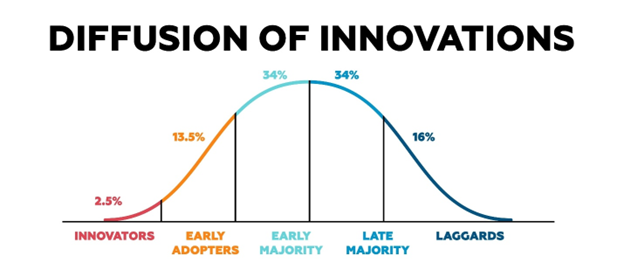
The Late Majority-those who approach change with a healthy dose of skepticism and a need for stability-typically make up 34% of your workforce.
When leaders pressure this 34% to "hurry up and agree," they don't just create friction-they miss out on the vital intelligence these employees hold.
The Strategic Value of the "Slow" Process
If your organization is currently navigating a pivot, merger, or digital transformation, ignoring your tradition holders creates three specific risks:
1. The Loss of Institutional Memory
Early adopters are often focused on the "What" and the "Future." Tradition holders are the keepers of the "How" and the "Past." They remember what failed in previous cycles and why. By giving them space to speak, you are effectively stress-testing your new strategy against real-world hurdles before they become expensive mistakes.
2. The Trap of "Change Fatigue"
Pressuring people to adapt faster than their organic capacity allows triggers the brain's threat response. This leads to "Change Fatigue"-a state of burnout where even the best employees start to disengage. Honoring the human pace of change isn't just "kind"-it's a retention strategy.
3. The Lack of Authentic Buy-In
There is a difference between compliance (doing what you're told) and commitment (believing in the direction). Compliance is fast, but it's brittle. Commitment takes time to build, but it is what sustains an organization when the initial excitement of a new project fades.
Moving Toward "Inclusive Agility"
So, how do leaders bridge the gap between the need for speed and the reality of human nature?
It starts by shifting the environment from persuasion to listening. When people feel there is space for their process, and their reflections on the change are truly heard, they often move forward faster. Paradoxically, the less we push, the more they are able to join the movement.
This is where specialized facilitation becomes a force multiplier.
Holding space for these "Tradition Holders" requires a neutral, expert perspective-someone who can translate skepticism into constructive feedback without allowing the session to devolve into a "venting" exercise. This structured listening converts your 34% from a "brake" on your progress into the "ballast" that keeps your ship steady.
Let's Support Your 34%
Implementing change is a delicate balance of strategy and psychology. If you are preparing for a significant organizational shift and want to ensure your "Late Majority" becomes an engine for sustainable growth, let's talk.
I help companies design and facilitate Change Listening Sessions that bridge the gap between where your organization is and where it needs to be.
[Contact Ayelet Magen to explore how we can support your leaders through their next transition.]